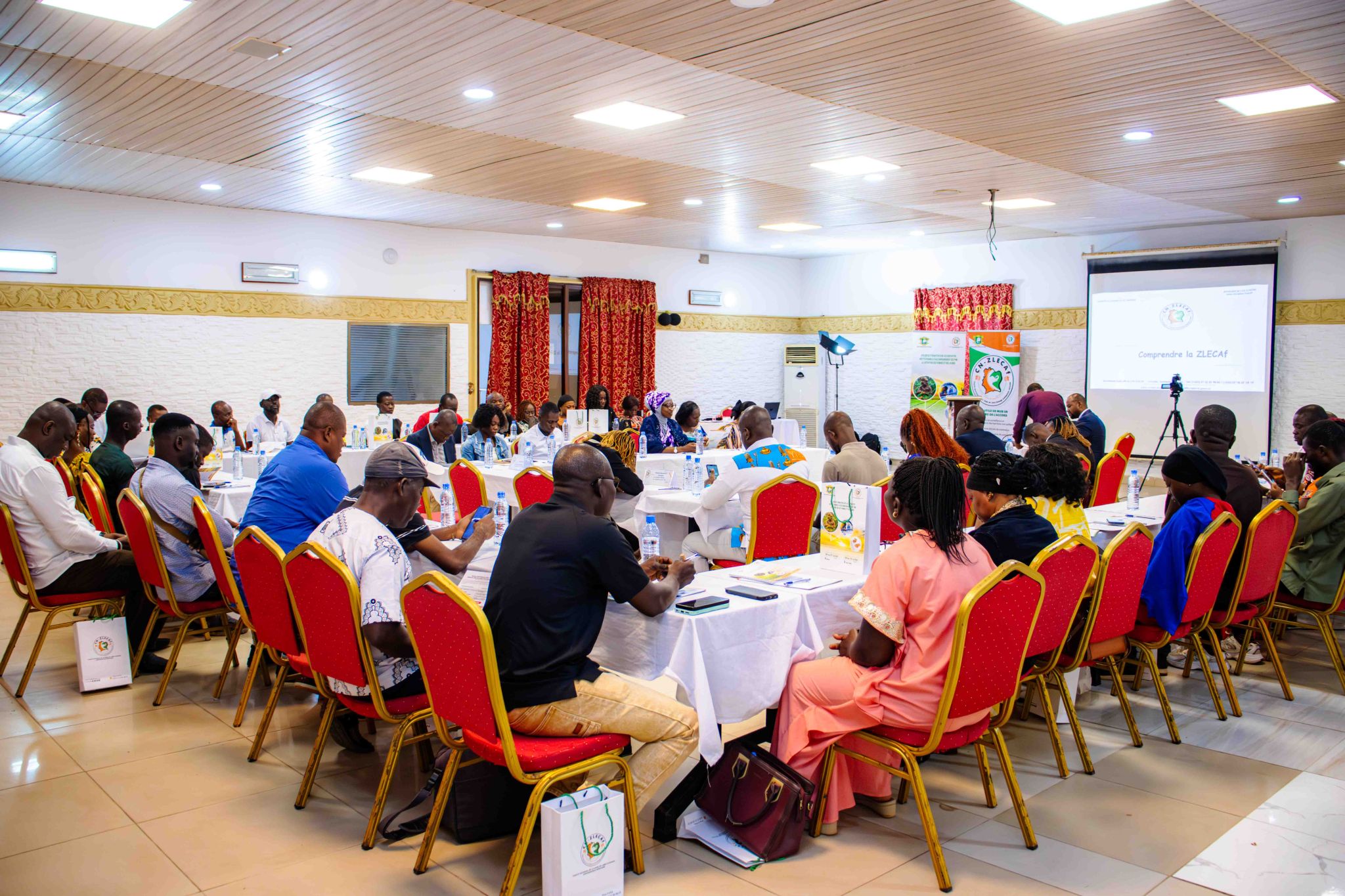
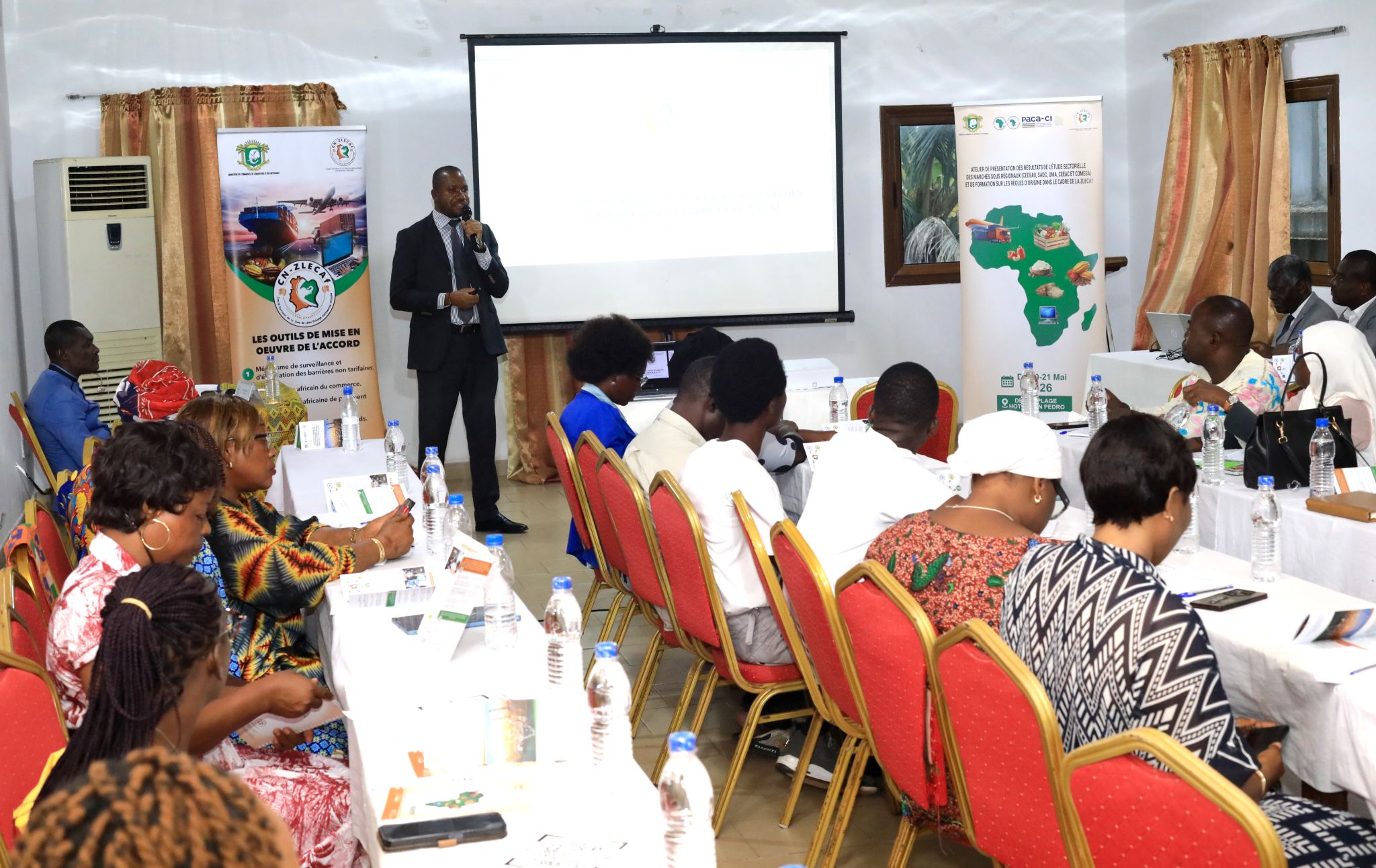
As part of the implementation of its Offensive Trade Sector Strategy, Côte d'Ivoire's National AfCFTA Committee (CN-AfCFTA) organized a workshop to present the findings of the regional market study and provide training on the AfCFTA Rules of Origin. The workshop aimed to strengthen the capacity of economic operators to better access African markets and fully benefit from the opportunities offered by the African Continental Free Trade Area (AfCFTA).
Strengthening Understanding of the Opportunities Offered by the AfCFTA
The first day of the workshop, facilitated by Mr. Yao Mathurin, enabled participants to deepen their understanding of the Agreement establishing the African Continental Free Trade Area (AfCFTA), its objectives, and the progress of its implementation in Côte d'Ivoire.
The presentations covered the commitments undertaken by the Ivorian Government, the key provisions of the Agreement, the opportunities available to domestic businesses, and the challenges associated with its implementation.
Participants were also introduced to the findings of the Offensive Trade Sector Strategy market study, which identified the most promising product-market combinations for Ivorian businesses across five African Regional Economic Communities (RECs): ECOWAS, ECCAS, COMESA, SADC, and the Arab Maghreb Union (AMU).
The study highlighted priority export markets where Côte d'Ivoire enjoys competitive advantages, providing businesses with valuable market intelligence to support their expansion across the continent.
Addressing the Concerns of Economic Operators
The discussions provided an opportunity for participants to raise several practical concerns affecting the growth of their businesses, including:
-
the need for improved access to trade and market information;
-
stronger support from business development institutions to enhance competitiveness and reduce production costs;
-
challenges related to market access and distribution channels.
These exchanges reaffirmed the importance of aligning trade policies with the realities faced by businesses and developing practical solutions that respond to the needs of Ivorian enterprises.
Rules of Origin: A Key Requirement for Preferential Market Access
The second day focused on one of the most strategic components of the AfCFTA: the Rules of Origin (RoO), which determine whether products qualify for preferential tariff treatment under the Agreement.
The training session was delivered by Mr. LOBA Mobio Marc, Technical Adviser to the Director General of Côte d'Ivoire Export. He provided participants with a comprehensive overview of preferential Rules of Origin and emphasized their importance in facilitating trade under the AfCFTA and other Preferential Trade Agreements.
The sessions covered:
- the origin criteria under the AfCFTA;
- the procedures for obtaining the AfCFTA Certificate of Origin;
- the main challenges encountered by exporters when applying the Rules of Origin.
The workshop concluded with practical exercises and case studies based on the eight products identified in the market study, enabling participants to strengthen their understanding of the Rules of Origin applicable within the five targeted Regional Economic Communities.
Preparing Ivorian Businesses to Access the African Market
Through this workshop, the National AfCFTA Committee reaffirmed its commitment to supporting Ivorian businesses in preparing for intra-African trade. By providing strategic market intelligence and strengthening participants' understanding of the AfCFTA Rules of Origin, the Committee is helping improve the competitiveness of Ivorian enterprises and their ability to fully capitalize on the opportunities created by Africa's single market.
This initiative, made possible through the support of the African Development Bank (AfDB) under the Business Climate Improvement Support Programme in Côte d'Ivoire (PACA-CI), forms part of the Committee's broader efforts to build the long-term capacity of the Ivorian private sector and facilitate its successful integration into the continental market.