
According to South African President Cyril Ramaphosa, member states are relying on the support of the African Union (AU) and its partners to achieve the massive vaccination of their populations against COVID-19.
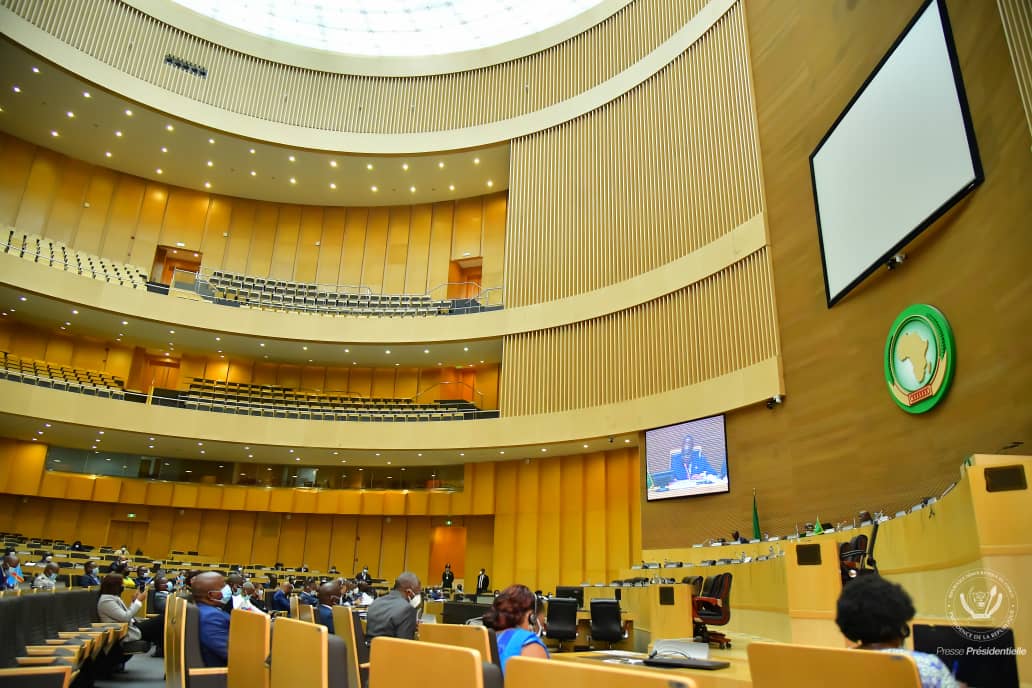
The 34th Ordinary Session of the African Union, held virtually from 6 to 7 February 2021, enabled the Heads of State and Government to review a number of priority documents.
These included the fight against Covid-19, the implementation of the African Continental Free Trade Area (AfCFTA) and the institutional reforms of this organisation.
Combating Covid-19, a Priority for States
The AU is committed to strengthening the collective response to the crisis, mobilizing resources for the benefit of all, and ensuring that no country is left behind.
In this respect, its strategy is for member states to benefit from efforts to prevent and contain the pandemic, and to profit from the roll-out of the vaccination program.
According to South African President Cyril Ramaphosa, member states are counting on assistance from the AU and its partners to achieve mass vaccination of their populations against Covid-19.
For his part, the AU's new Chairman-in-Office praised the ingenuity and resilience of African countries in the fight against the pandemic. He called for joint efforts in a major offensive against these various scourges.
“It is imperative that our organization be able to strengthen the African Center for Disease Control and Prevention (CDC Africa) in order to respond effectively to complex health emergencies and challenges, as a specialized technical institution of the African Union”, declared Félix-Antoine Tshisekedi.
He also announced that he was delighted to make his predecessor the President, Cyril Ramaphosa, the champion of the Covid-19 vaccine strategy and the acquisition of these vaccines by AU member states. However, it would still be necessary to mobilize the relevant funds, with the aim of ensuring that these vaccines are accepted by African populations.
AfCFTA, for Peace and Prosperity
Relying on collaboration with regional economic communities, the African Union has reaffirmed its determination to pursue the operationalization of the African Continental Free Trade Area (AfCFTA).
According to an official document, the Heads of State welcomed the commitment to boost trade and integration, demonstrated by the progress made in making the AfCFTA a reality for Africans.
“The Assembly noted the correlation between peace and security issues and economic exchanges, infrastructure development, the individual and collective development of citizens, and the involvement of young people and women in socio-economic development”, he explains.
What's more, terrorism, community conflicts, violent extremism, violent electoral crises, transnational crime and trafficking were cited as challenges that have hampered the continent's development.
The Chairman of the AU Commission, for his part, reassured of the determination of States “to put an end to these tragedies that stick to the continent and degrade its image, in order to restore hope to Africans and build the Africa that everyone wants.”
Boosting Institutional Reform
The process of institutional reform of the African Union is underway, with the appreciable support of the Heads of State and Government.
According to Rwandan President Paul Kagame, who presented the progress report on this reform, notable progress has been made, including sustainable financing of the Union and the Peace Fund, even though the AU's Program Budget is still too dependent on external funding.
However, he maintained, certain aspects of this ongoing reform need to be given impetus. These include the reform of the judiciary, the Parliament and the structures of the Commission. The division of labor with the regional economic communities is also behind schedule.
“I ask the new Commission to give priority attention to these points, so that they can be completed this year without fail. Indeed, I believe that the implementation of the institutional reform mandate can be completed by the time of the next Summit”, recommended Paul Kagame.
It should be noted that the completed forensic audit of the Commission should be implemented without further delay. This calls for greater responsibility to safeguard the credibility of the African Union.
Activities under the 2021 Theme
The African Union summit signaled the launch of activities to mark the 2021 theme on “Arts, Culture and Heritage: a Lever for Building the Africa We Want”.
“I intend to anchor the theme of my presidency of the African Union in the following vision: an African Union at the service of the people. This specific vision, which is in line with the First Ten-Year Implementation Plan 2014-2023 of Agenda 2063, will be structured around nine strategic pillars further detailed in my action plan,” said AU current Chairman Félix-Antoine Tshisekedi.
Through this theme, the African Union pledges to work towards consolidating and supporting the growth and recognition of Africa's cultural and artistic riches as a common unifying foundation that can galvanize the common will of African peoples, those on the continent as well as those in the diaspora.
On this subject, the President of the Transitional Government of the Republic of Mali, Bah Ndaw, noted the inadequacy of budget allocations to the culture, arts and heritage sectors.
“He therefore urged member states to allocate at least 1% of their national budgets to these sectors by 2030, in order to make the arts and culture sectors strong vectors for peace, integration, growth and development in Africa”, reads the official minutes.
Meanwhile, the African Union remains committed to promoting a renaissance of African culture, arts and heritage; combating climate change; accelerating integration projects, including the construction of the Inga Dam; and consolidating African Union initiatives in the fight against Covid-19 and the prevention of other diseases.
“The time has come to invest more in education and scientific research. It is in the highly strategic interest of each member state to devote a large proportion of its revenues to the development of its human capital, which is the main asset, the only one that can be effectively mobilized to solve its specific problems and face its challenges”, insisted Félix-Antoine Tshisekedi.
These high-level exchanges between the continent's Heads of State and Government continue this Sunday 7 February 2021, under the leadership of the new Chairman of the African Union. At the end of the day, Félix-Antoine Tshisekedi will bring the proceedings to a close.
At the level of both the organs of the African Union and the member states, there is a firm commitment and unwavering determination to meet the challenges that lie ahead during this 2021-2022 financial year.
Éric TSHIKUMA, Special Envoy