
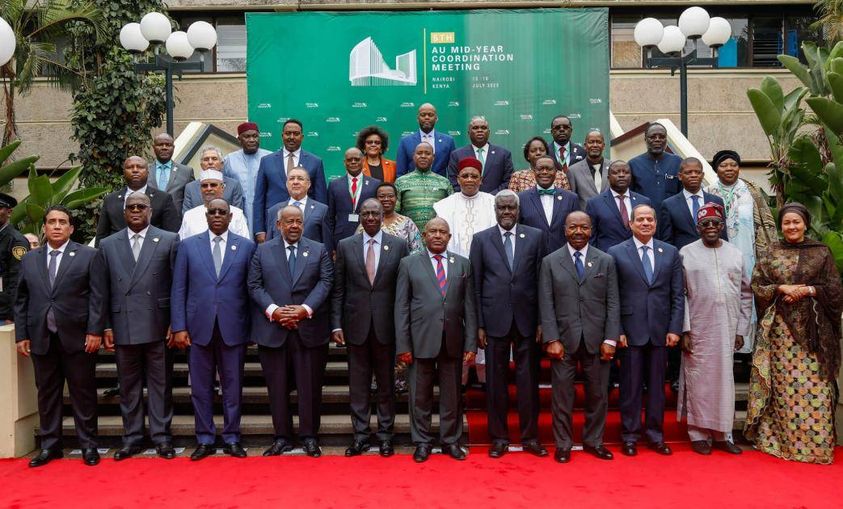
The African Union's fifth mid-term coordination meeting concluded on 16 July with the adoption of a declaration by Heads of State and Government representing the Bureau of the Assembly of the African Union, alongside Chairpersons of the eight Regional Economic Communities (RECs) and Regional Mechanisms (RMs).
This declaration underscored the urgency of accelerating Africa's integration process to meet globalisation challenges and highlighted the importance of harmonising national and regional policies to advance socio-economic development.
Moussa Faki Mahamat, Chairman of the African Union Commission, acknowledged the progress achieved thus far but noted that further coordination is required. He pointed out that the ongoing division of labour among the African Union, RECs, regional mechanisms, and Member States will need to expand its scope. This includes involving continental financial institutions, think tanks, research centres, the UN Economic Commission for Africa, civil society, and the private sector to achieve optimal functionality.
Despite progress, Mahamat highlighted significant structural challenges. These include a financing gap for continental infrastructure programmes, worsening peace and security conditions, slow transformation of production structures to include women and youth as drivers of progress, and delays in ratifying the protocol on free movement of people and goods.
He urged Member States to ratify the Protocol to the Treaty Establishing the African Economic Community on free on the free movement of persons, the right of residence and the right of establishment, which requires fifteen ratifications to enter into force.
The African Continental Free Trade Area (AfCFTA) has demonstrated substantial progress, strengthening the belief that the continental common market is a pivotal opportunity to achieve the pan-African vision of an "integrated, prosperous, and peaceful Africa."
In line with the African Union's 2023 theme of accelerating AfCFTA implementation, bridging the infrastructure development gap remains a critical factor in attracting investment and enhancing intra-African trade.
Azali Assoumani, President of the Union of the Comoros and Chairperson of the African Union for 2023, identified the development of maritime transport as a cornerstone for successful economic integration across Africa.
Kenyan President William Ruto emphasised that the advancements in implementing the AfCFTA signify Africa's irreversible integration trajectory. He highlighted how this progress paves the way for unprecedented socio-economic transformation.
Ruto also stressed the importance of implementing the African Union's decision on financing to establish a sustainable, predictable, and reliable self-financing mechanism for the Union.