

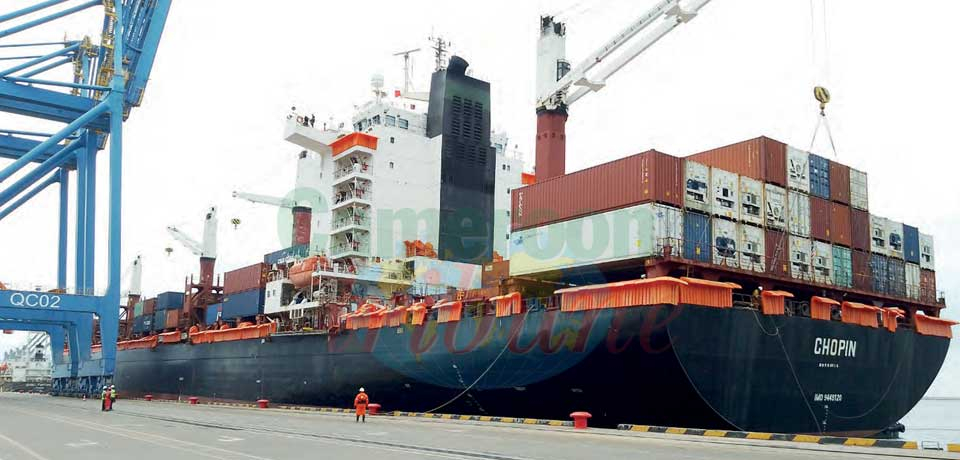
A shipment of resin from Tunisia arrived at the deepwater port of Kribi yesterday, following products exported to Ghana last October.
A shipment of resin from Tunisia under the African Continental Free Trade Area (AfCFTA) regime arrived at the deepwater port of Kribi on 3 July 2023. The cargo was processed as part of the test phase for the implementation of the AfCFTA. In other words, the unloading of this cargo marks the beginning, in Cameroon, of the dismantling of customs tariffs on a product admitted to the AfCFTA regime. Products to be traded under this initiative include ceramic tiles, batteries, tea, coffee, processed meat products, corn starch, sugar, pasta, glucose syrup, dried fruit and sisal fiber. Cameroon, alongside seven other countries including Ghana, Rwanda, Kenya, Mauritius, Egypt, Tanzania and Tunisia, has been selected for the experimental phase, which aims to promote trade outside the economic blocs.
A dismantling scheme had been ordered by the African countries. Member states undertook to reduce customs duties on 90% of goods traded between them, in equal annual instalments, until they were eliminated within five years for non-Least Developed Countries (LDCs), and 10 years for Least Developed Countries (LDCs). While 7% of products considered sensitive will be eliminated in 13 years for LDCs and 10 years for non-LDCs. 3% of products will be excluded from tariff commitments, and therefore not subject to liberalization. Central Africa has submitted to the African Union a list of 5,838 tariff lines for the three groups. The main group comprises 5255 tariff lines, i.e. 90.01% of the list. The second group totals 408 lines.