
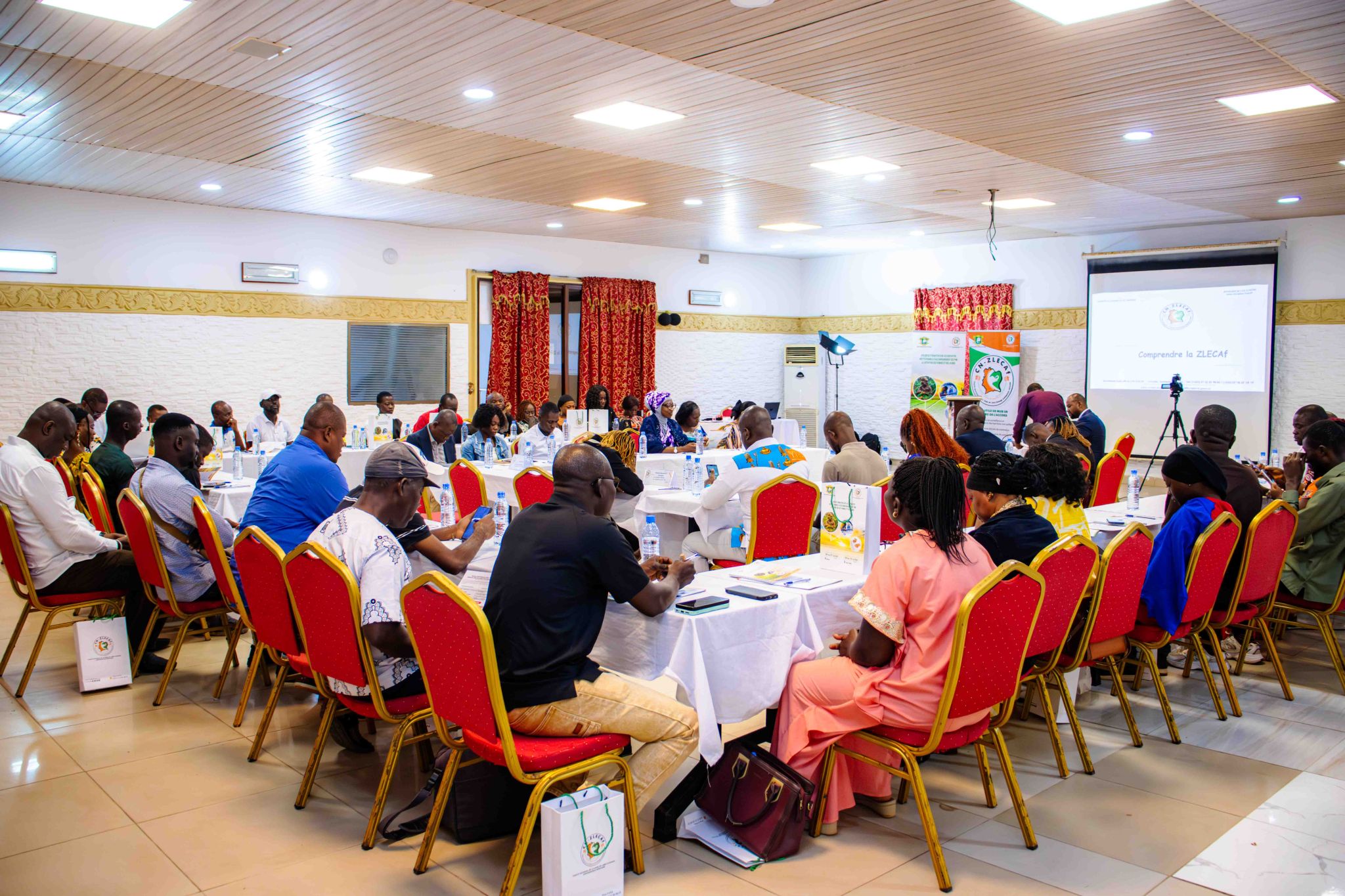
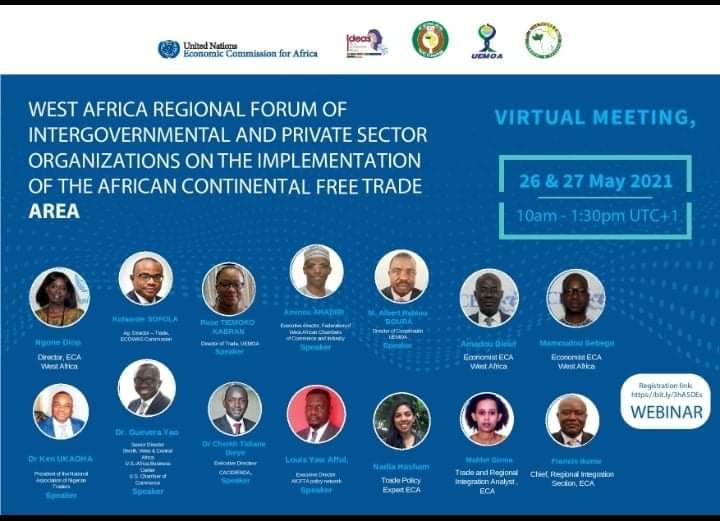
From 26 to 27 May 2021, intergovernmental organisations and private sector stakeholders from West Africa gathered via videoconference to discuss ways to enhance the implementation of the African Continental Free Trade Area (AfCFTA) in the sub-region.
This virtual sub-regional forum addressed a crucial topic at a time when West African economies, like those around the world, are enduring the significant impact of the COVID-19 pandemic. This economic strain is illustrated by figures showing that real GDP growth in West Africa dropped to 0.7% in 2020, down from 3.5% in 2019, according to data from the United Nations Economic Commission for Africa (UNECA).
The forum, co-organised by the Sub-Regional Office for West Africa of UNECA, the Commission of the Economic Community of West African States (ECOWAS), and the Commission of the West African Economic and Monetary Union (UEMOA), was both timely and necessary.
Although the AfCFTA entered its operational phase on 1 January 2021, questions remain regarding its effective implementation. The varying levels of development among countries within the trade area contribute to the complexity of this task. This forum was therefore designed to address these challenges and propose solutions for implementing the AfCFTA successfully.
The primary goal of the forum was to reinforce the readiness and participation of sub-regional stakeholders, including Regional Economic Communities, intergovernmental organisations, and private sector platforms, in the AfCFTA’s implementation process.
The event brought together various West African intergovernmental organisations and private sector entities, such as the Federation of West African Chambers of Commerce and Industry (FEWACCI), the UEMOA Regional Consular Chamber (CCR/UEMOA), the Federation of West African Employers , West African Women's Association (AFAO-WAWA), the Association of Young Entrepreneurs of West Africa, the National Association of Nigerian Traders (NANTS), ECOBANK, the African Organization for Standardization (ARSO), and regional partners.
In her opening remarks, Ms. Ngone Diop, Director of UNECA's Sub-Regional Office for West Africa, underscored that the AfCFTA provides a platform to create a single continental market that fosters business growth, unlocks industrial potential, and boosts intra-African trade.
Ms. Diop highlighted that the AfCFTA could serve as a comprehensive framework to enhance the business ecosystem and link local businesses to regional and global value chains.
"The UNECA 2020 Africa Economic Report shows that a successful AfCFTA will establish a single African market with over 1.2 billion consumers and a combined GDP exceeding $2,500 billion, generating consumer and business spending of $6.7 trillion by 2030," she stated.
She also emphasised the significance of successful implementation, noting that the AfCFTA could increase African trade by 15 to 25% by 2040, boost production capacity, and promote industrialisation, thereby creating jobs and fostering sustainable growth.
"The AfCFTA presents an opportunity to pivot from consumption-driven growth to more sustainable economic drivers, transitioning from subsistence and non-tradable services to those offering higher value-added and productivity—a move toward service-based economies," Ms. Diop reiterated.
Over the course of the two-day forum, participants outlined both the strengths and challenges of the AfCFTA's implementation and developed recommendations to guide policymakers.
Diallo Boubacar 1
For Africaguinee.com