
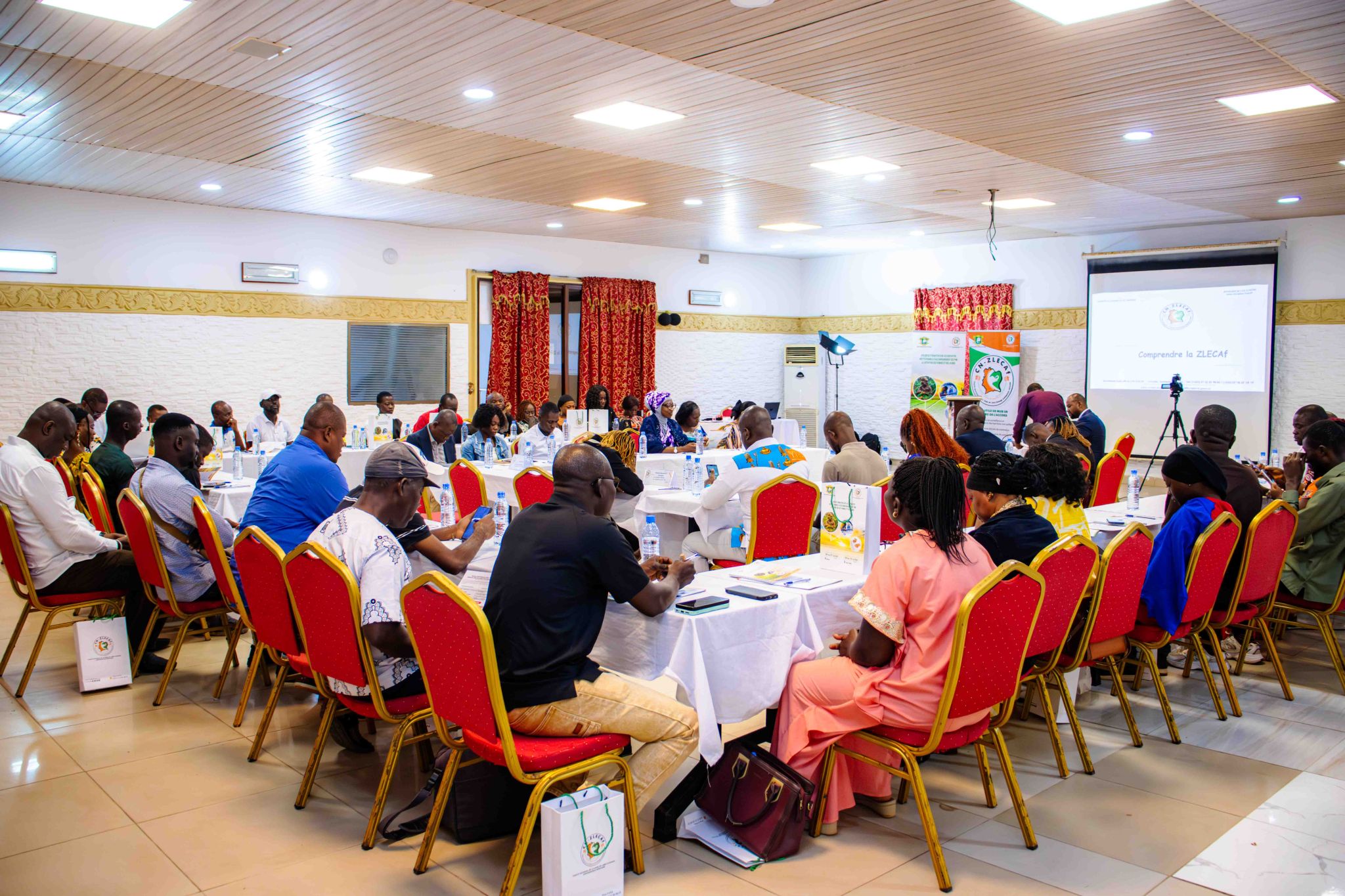
An information, awareness-raising, and training seminar for the directors and general secretaries of the member organizations of the UEMOA Regional Consular Chamber (CCR-UEMOA) on the African Continental Free Trade Area (AfCFTA) was held in Abidjan from 6 to 8 September 2022. The aim was to help the community's private sector seize the opportunities offered by this continental market.
Directors and general secretaries of member organizations of the Regional Consular Chamber of the West African Monetary Union (CCR-UEMOA) took part in a training and awareness-raising seminar on the African Free Trade Area (AfCFTA) from 6 to 8 September 2022 in Abidjan.
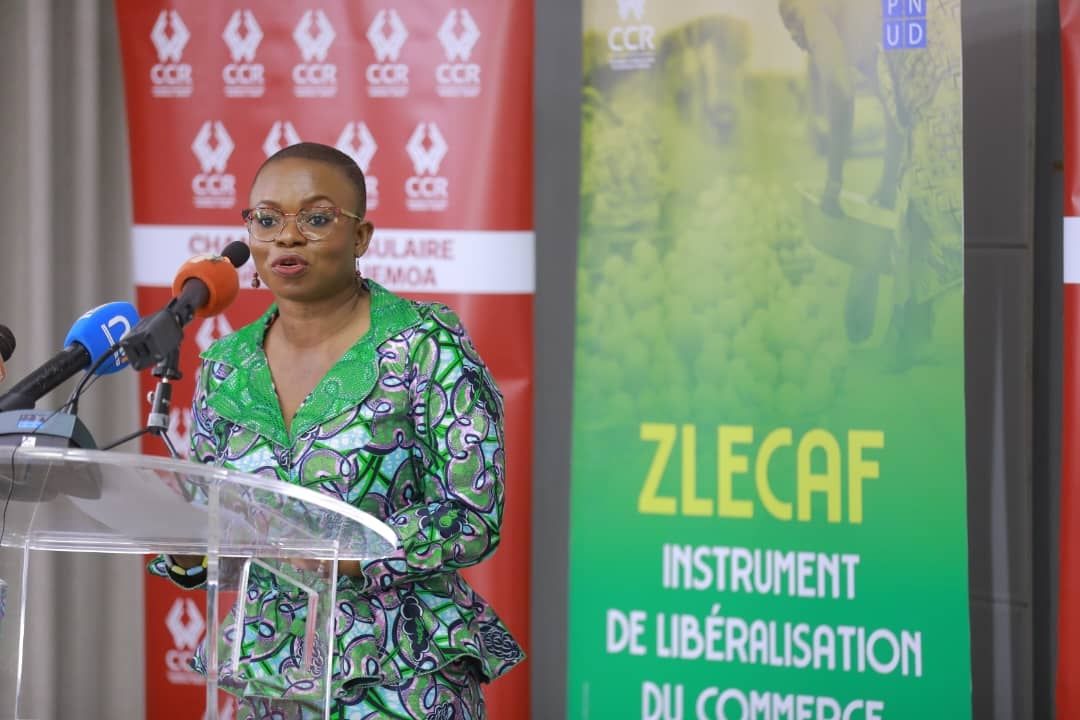
The seminar is being held on the initiative of the CCR-UEMOA, in partnership with the West Africa regional office of the United Nations Development Programme (UNDP), in collaboration with the AfCFTA General Secretariat. "More than a trade agreement, the AfCFTA is a development tool that provides a framework for deepening socio-economic integration and cooperation to stimulate trade, investment, and the mobility of people, with the aim of fostering the industrialization of the continent and the development of a dynamic services sector.
It is therefore essential to place greater emphasis on intra-regional trade, investment in infrastructure, and the application of trade and industrialization policies capable of safeguarding food self-sufficiency and the development of regional value chains (RVCs) in order to ultimately create decent jobs, increase incomes, and thus promote inclusive growth," said Cynthia Gnassingbé, Senior Adviser on Private Sector Engagement, representing Wamkele MENE, Secretary General of the AfCFTA Secretariat.
With the entry into force of the AfCFTA on 1 January 2021, it has become imperative for the UEMOA private sector to have a regional strategy to help businesses in the Union make the most of this single market. To this end, the UEMOA Regional Consular Chamber (CCR-UEMOA), with the technical and financial support of the Africa Regional Office of the United Nations Development Programme (UNDP), plans to mobilize the Secretaries and General Managers of member organizations, mainly around the issue of the AfCFTA.
At the end of the three days' work, the participants had deepened their knowledge of the AfCFTA and were informed of current UEMOA projects and programmes in favour of the private sector, with a view to their appropriation.
The Secretaries and General Managers now have a good grasp of the implications of the AfCFTA. The UEMOA private sector has therefore been made aware of the tools and instruments for managing financial flows developed in the context of the entry into force of the AfCFTA, and recommendations have been made to ensure greater participation by businesses in intra-African trade. The financial tools and instruments developed by the AfCFTA General Secretariat to facilitate intra-African trade have also been presented to the Union's private sector.
The implications, opportunities, and difficulties facing the private sector in relation to the entry into force of the AfCFTA were also discussed. The seminar was led by experts from the UEMOA Commission, the AfCFTA General Secretariat, UNDP, AFREXIMBANK, member organizations, and the Administrative Services of the CCR-UEMOA.
AfCFTA, a Major Market for Economic Stakeholders
Today, the AfCFTA offers African businesses the prospect of trading goods and services in the world's largest free trade area made up of 55 countries, representing 1.3 billion people and a combined GDP of over USD 3.4 trillion, projected by the World Bank to reach USD 7 trillion by 2035.
It is therefore an important market that is open to all economic players and is likely to attract foreign investment from the continent and the rest of the world. The potential of the AfCFTA cannot be overestimated.
The World Bank estimates that the African market under the AfCFTA regime will increase the volume of intra-African trade by 81% by 2035, and the total volume of African exports by 29%. The IMF also forecasts welfare gains of between 2% and 4%, driven mainly by the reduction in non-tariff barriers under the AfCFTA.
Credit: leconomistedutogo