
Faced with uncertain prospects for global economic development and a complex geopolitical landscape, African leaders at this week's summit are striving to promote the continent's economic integration, while defending a position of non-alignment on conflicts outside Africa.
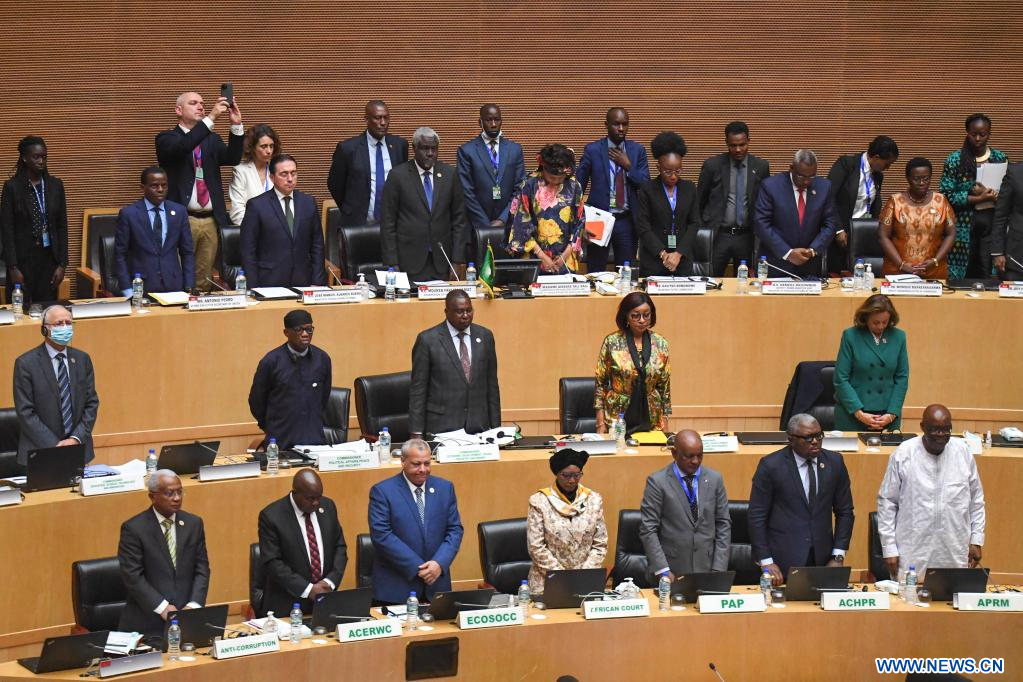
The 42nd Ordinary Session of the Executive Council of the African Union (AU) opened on Wednesday in the Ethiopian capital, Addis Ababa, with a call to work towards deepening African integration and realising the continent's development aspirations.
The session, which is being held from 15 to 16 February in preparation for the 36th Ordinary Session of the AU Summit of Heads of State and Government scheduled for 18 and 19 February, is being held under the AU's theme for 2023: " The Year of AfCFTA: Acceleration of the African Continental Free Trade Area Implementation".
According to a press release published on its website on Wednesday, the AU should make a greater political commitment and strengthen existing collaboration between member states, regional economic communities, AU institutions, the private sector and other stakeholders, in order to accelerate the effective implementation of the AfCFTA for the benefit of the people and to achieve the aspirations and objectives of Agenda 2063.
The Acting Executive Secretary of the United Nations Economic Commission for Africa (UNECA), Antonio Pedro, called on African countries to make a concerted effort to create a continental free trade area.
"The continental free trade pact, by offering more opportunities to women and young people, is helping to reduce inequality and poverty, and to improve inclusion," said Mr.Pedro.
Obviously, this year's AU heads of state summit will take place at a "delicate moment" for the continent, which is on the road to economic recovery after the impact of the COVID-19 pandemic but held back by the consequences of the Ukrainian crisis.
While many Western analysts see in this crisis a geopolitical turning point towards the organisation of the so-called "alliance for freedom" around the United States and its allies, the African countries, far from the epicentre of the conflicts but also very much affected by the consequences in terms of energy and food security and economic development, are keen not to take sides.
The Southern African Development Community (SADC), which brings together 16 countries in the south of the continent, called on its members to maintain a non-aligned position on conflicts outside Africa, at an Extraordinary Troika Summit of the SADC in Windhoek, Namibia, on 31 January.
On the conflict in Ukraine, "we are dwelling on our positions", declared the Senegalese President and current Chairman of the AU, Macky Sall, on Tuesday at the World Summit of Governments in Dubai.
Noting that the African continent was "a victim" of this conflict, he also stressed that Africa did not have to fall into line and was working with all parties for peace.
Instead of supporting sanctions against Russia, many African countries are calling for mediation efforts to restore peace between the warring parties.
Faced with unprecedented crises such as food and energy security, Africa is trying to turn them into opportunities by developing its own potential and adopting balanced diplomatic policies.
According to Pedro, the AfCFTA continental market allows for economies of scale, investment in manufacturing and increased intra-African trade, which in turn helps to build Africa's supply chain and leads to a degree of self-sufficiency in essential commodities such as medicines, food and fertilisers.
"It is only through accelerated and effective implementation of the AfCFTA that Africa will be able to put in place sufficient shock absorbers to strengthen its resilience," he said on Wednesday.
XINHUANET