

Stephen Karingi, Director of the Regional Integration and Trade Division at the Economic Commission for Africa (UNECA) has called on African countries to accelerate the reform of their domestic policy and institutional landscape in order to boost intra-African trade and accelerate economic transformation through the effective implementation of the African Continental Free Trade Area (AfCFTA).
"Africa was now thinking about its next steps towards a customs union and a common market," said Mr.Karingi, stressing that "the continent was no longer a powerless bystander as developed countries pursued their own strategic interests at Africa's expense."
He was speaking at the opening of the third Steering Committee Meeting (SCM) of the African Trade Policy Centre (ATPC) in Accra, Ghana.
"AfCFTA now provides the ideal platform for Africa to pursue policies of strategic autonomy like everyone else," said Mr. Karingi, adding that "AfCFTA is a development tool that can help Africa address many challenges such as food insecurity, unemployment, marginalisation and health insecurity."
In his view, the key to success in this venture lies in the ability of Africans to use AfCFTA as a platform for the industrialisation of Africa. He pointed out that the UNECA is supporting a number of initiatives, including the development of the electric battery value chain in the Democratic Republic of Congo (DRC) and Zambia.
The Economic Commission for Africa (UNECA) estimates that implementation of the Agreement establishing the African Continental Free Trade Area (AfCFTA) will boost intra-African trade by around 35% by 2045, to the benefit of all major sectors.
In this respect, the AfCFTA should help Africa not only to industrialise, but also to reduce its dependence on energy and mining, says the UNECA.
With intra-African trade currently dominated by manufactured products, the UNECA believes that the Agreement is likely to help Africa reduce its current dependence on imports of manufactured products, with agri-food and industry accounting for the bulk of Africa's benefits from the Agreement, with a few exceptions.
In addition, the start of trade under the Agreement has led to the launch in October 2022 of the AfCFTA Guided Trade Initiative as a pilot project involving eight countries: Cameroon, Egypt, Ghana, Kenya, Mauritius, Rwanda, Tunisia and the United Republic of Tanzania.
The Guided Trade Initiative aims to facilitate meaningful trade between countries that have met the minimum requirements to trade under the Agreement.
It should also test the operational, institutional and legal environment, as well as the trade policy framework, across the continent and encourage other countries to start trading formally under the Agreement.
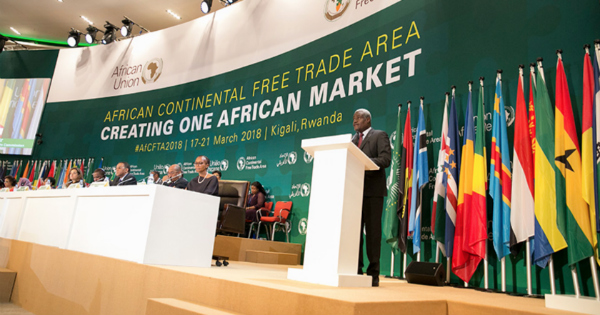
A large market of 1.3 billion people, AfCFTA was launched on 1 January 2021.
Afrik Emergence