
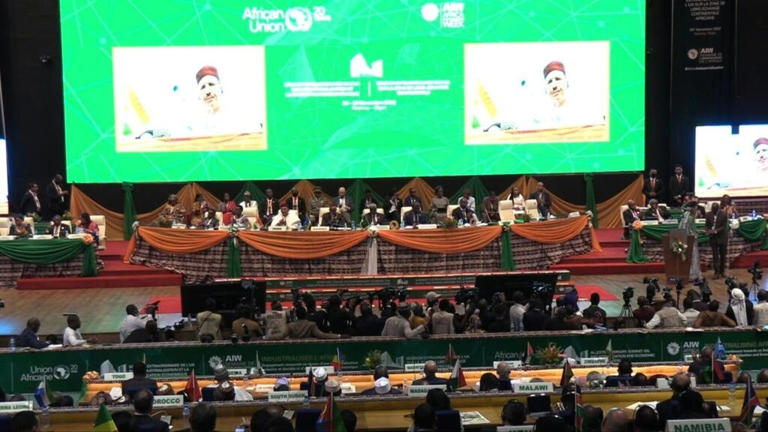
The double summit of the African Union on the industrialization of Africa and the AfCFTA came to a close in Niamey on Friday November 25. In the morning, the ten or so heads of state discussed the need to industrialize Africa. In the afternoon, the heads of state turned their attention to the AfCFTA.
If there is one thing on which the heads of state and government present at the summit were unanimous, it is the innumerable potential the continent has to play its part in this quest for industrialization. To achieve this, however, it will have to overcome a number of challenges, such as energy and advanced technologies, explains our correspondent in Niamey, Mahamoud Kaba Diakité.
According to Moussa Faki Mahamat, Chairman of the African Union Commission, “investment in energy could operate as a vector for regional integration and the promotion of industry, because we know that energy consumption remains very low on the continent, with over 600 million Africans never having had electricity.”
What emerged from the summit was the need to rethink Africa's industrialization model. To meet this challenge, Niger's President Mohamed Bazoum, designated by his peers as a champion of inclusive and sustainable industrialization, proposes pooling efforts and developing partnerships with industrial powers. “We will win to attract lessons from the experiences of the industrialized world and the singular experiences of each other. The future of industry and trade lies in Africa.”
Towards the World's Largest Economic Zone
There was also talk of the African Continental Free Trade Area (AfCFTA), as the summit was also the occasion for the first extraordinary session of the free trade zone. Senegalese President Macky Sall, also current Chairman of the AU, whose speech was read by Foreign Affairs Minister Aïssata Tall Sall, called on states to swiftly ratify the agreement creating the AfCFTA. Of the 55 member states of the African Union, 54 have already signed the agreement. And to date, 44 states have already ratified the agreement. Experts agree that AfCFTA is the largest economic zone in the world.
The AfCFTA meeting was held behind closed doors all afternoon, reports our correspondent in Niamey, Moussa Kaka. Mahamadou Issoufou, the champion of the AfCFTA, presented his progress report to the ten or so heads of state present, in the presence of the Chairman of the African Union Commission, Moussa Faki. The report was adopted unanimously. According to one expert, the report covers three protocols: investment in Africa, competition policy and the protocol on intellectual property.
According to sources close to the session, the adoption of this report will enable progress to be made in the process of implementing the agreement establishing the AfCFTA. This 90% opening zone for trade between the countries of the African Union.
Credit: RFI