

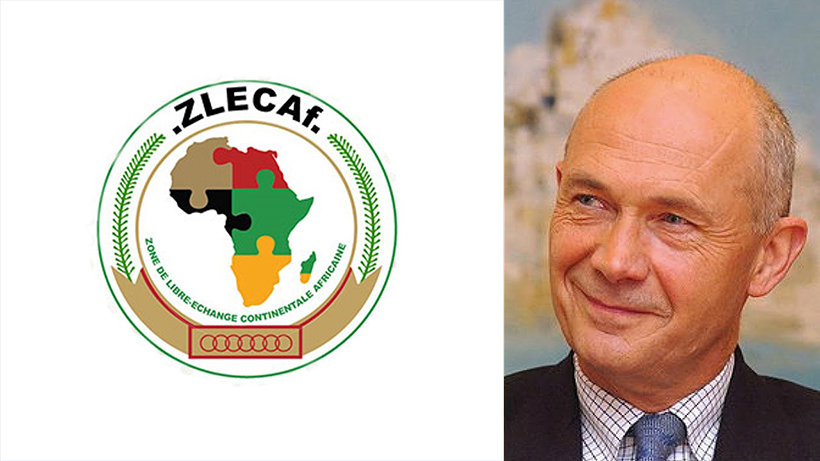
Pascal Lamy, former Director of the World Trade Organization (WTO), views the African Continental Free Trade Area (AfCFTA) as a pivotal instrument for reshaping Africa's map, diverging from the colonial-era boundaries. While the vision is clear, implementing it could pose significant challenges.
In an interview with La Tribune Afrique, Lamy highlighted that the AfCFTA represents Africa’s pathway out of what he described as "the worst legacy of colonialism"—the numerous borders dividing the continent. "We have instilled political and economic nationalism in this continent, and we must overcome it... In the long term, true economic and commercial integration will require the abolition of borders," Lamy noted.
He emphasized that the AfCFTA is more than just a trade agreement; it is a catalyst for deeper integration. "It marks a major turning point because it will allow some African markets to evolve on a global scale. African countries with markets of 15 or 30 million inhabitants do not match the scale of today’s consumer markets, which range from 100 to 200 million consumers," Lamy explained.
While his perspective seems logical, it is not universally shared across the continent. To date, only 38 African nations have ratified the AfCFTA agreement. Notably, Morocco, a major investor in Africa, has not ratified the agreement due to political tensions involving Western Sahara, which the African Union recognizes as an AfCFTA member state.
The stakes, however, extend beyond nationalist concerns. Africa's population of over 1.2 billion has vast needs, yet only 16% of trade occurs within the continent. A Nigerian may travel to Dubai to purchase flowers from Kenya or go to Switzerland for Ivorian cocoa, highlighting the difficulty of sourcing African products within Africa. Furthermore, importing goods from Asia often proves simpler than obtaining the same items from another African country.
Dismantling these borders will not be straightforward. Borders take different forms beyond the physical demarcation on maps. For example, while countries like Benin have opened their borders to African nationals, they have yet to ratify the AfCFTA agreement. Many other nations have signed the Common Market Act, yet still require visas for entry. Another significant barrier is customs tariffs, which remain an essential source of revenue for numerous African countries.
Past discussions surrounding Economic Partnership Agreements between Africa and the European Union underscore the complexities of tariff reduction and dismantling. The third type of border to address is regulatory, encompassing labor laws and standards for the production and marketing of goods and services. These challenges are compounded by a lack of external support from Africa’s major partners.
Key global partners such as the European Union, China, and the United States continue to pursue nationalist policies to protect their interests. Despite Europe-Africa trade relations, bilateral agreements persist, involving various partner countries or communities. Lamy's vision of border elimination, while concrete and promising, faces numerous obstacles in the medium term.
Idriss Linge
(Agence Ecofin)