
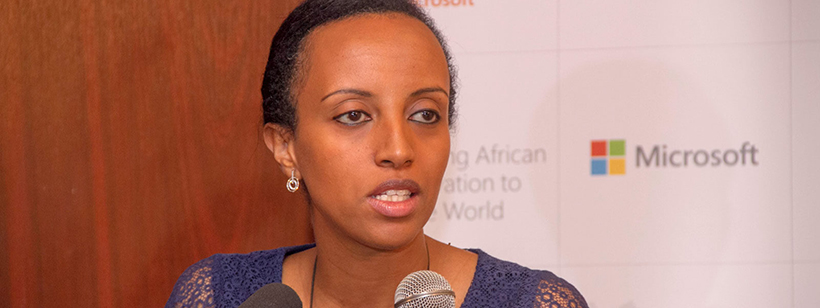
Casablanca – The African Continental Free Trade Area (AfCFTA) holds significant potential to improve the lives of millions of Africans, with technology playing a crucial role, stated Amrote Abdella, Regional Director at Microsoft 4Afrika.
“Despite the many challenges the Covid-19 pandemic has brought to Africa, significant changes are underway, and few hold as much potential impact as the AfCFTA,” Abdella wrote in an article.
This trade area, Abdella explained, represents a pivotal agreement that will transform the economic landscape of the signatory countries. She pointed out that Africa currently accounts for only 2% of global trade, with just 17% of African exports being intra-continental. In contrast, Asia and Europe have intra-continental export rates of 59% and 68%, respectively.
The AfCFTA aims to establish the largest free trade area in the world in terms of the number of participating countries, linking 1.3 billion people across 55 countries with a combined Gross Domestic Product (GDP) of approximately $3.4 billion.
The agreement is expected to boost regional income by 7%, equivalent to $450 billion, and lift 30 million people out of extreme poverty by 2035. Abdella added that wages are projected to rise by 10.3% for unskilled workers and 9.8% for skilled workers.
"At a time when the Covid-19 pandemic has thrown a spotlight on the vulnerabilities of the global supply chains, the establishment of the AfCFTA agreement could not be more timely for Africa," noted Amrote Abdella, Regional Director at Microsoft 4Afrika. She emphasized that the AfCFTA serves as a catalyst for innovative ways of doing business, production, work, and trade within Africa and with the rest of the world.
This area underlines the African Union's significant and growing commitment to reducing poverty through trade," she pointed out. Abdella highlighted that, as stated by Ngozi Okonjo-Iweala, the newly appointed Director-General of the World Trade Organization (WTO), "trade is a force for good and, if properly harnessed, can help lift millions of people out of poverty and bring shared prosperity."
SMEs Stand to Benefit
The AfCFTA has the potential to unlock innovation, growth, and productivity across Africa, particularly benefiting the continent's small and medium-sized enterprise (SME) sector. By converting purchasing power into economic development, the agreement can boost SME growth.
Reducing bureaucratic obstacles and simplifying customs procedures could result in significant revenue gains for SMEs. Enhanced digital skills would allow SMEs to capitalize on potential trade growth and expand their reach.
This is especially relevant considering that SMEs make up about 90% of businesses globally and contribute to over 50% of jobs worldwide. In emerging economies, formal SMEs account for up to 40% of national income, with figures rising considerably when informal SMEs are included.
Most formal employment in these markets is driven by SMEs, which create seven out of 10 jobs. "Digital skills are essential to the growth of any organisation, and we want to encourage the adoption of technology and the development of skills in every organisation," said Abdella.
Microsoft 4Afrika’s partnerships with SMEs and telecom operators have played a vital role in supporting SMEs on their growth paths. Collaborations with companies such as FirstBank, Vodacom, MTN, and Liquid Telecom have facilitated the extension of cloud services to SMEs, aiding their growth. To date, 4Afrika has reached 1.7 million SMEs and brought 728,000 of them online.
Digital Platforms as Effective Vectors for Positive Change
The rapid advancements in digital technology, ranging from trade logistics to electronic payments and automated processing, are driving cross-border trade. Digital platforms, alongside the growing use of mobile technology, are increasingly facilitating trade and promoting digital, financial, and social inclusion.
These platforms aggregate demand across the continent, enabling SMEs to access new markets and offer products and services that were previously limited by geographic constraints and marketing costs. This diversification effect strengthens supply chains, a necessary measure in an era of fragile global supply chains.
Access to affordable finance remains a challenge for many SMEs in emerging markets. A joint fintech agenda by the World Bank and the International Monetary Fund (IMF) urges countries to adopt new technologies that enhance financial service delivery, where platform technology can play a transformative role.
An example of this is Nigeria’s payment technology company Flutterwave, which empowers African businesses to go global, making and accepting payments anywhere in the world. Expanding digital inclusion can help SMEs tap into the commercial benefits offered by the AfCFTA.
Public-Private Collaboration Is Essential
According to the World Bank's report "Africa Pulse: Charting the Road to Recovery," with the slow recovery of global trade, regional policymakers should foster regional value chain development while laying the groundwork for full continental engagement.
Governments must seize opportunities to develop policies and prioritize investments that build resilience, enhance productivity, and create jobs. Strategic investments in digital infrastructure, services, and skills are vital for this development. Governments also need to foster an environment that supports rapid digital adoption by ensuring that all key enablers for digital uptake are in place.
Policymakers and the private sector should collaborate and commit to updating and reviewing national trade and digitalization policies to align them in ways that benefit both governments and business communities and enable cross-border trade.
A Single Digital Economy Is Essential in Africa
A robust digital infrastructure, along with digital skills, financial services, and a supportive environment for digital businesses, are crucial for creating a single digital market in Africa. This would enable African businesses to compete regionally and globally.
Microsoft is committed to supporting the development and implementation of digital policies across Africa and partnering with governments to establish strong digital frameworks that allow people and businesses to fully engage in the global digital economy.
Regional integration can contribute to the growth of Africa’s digital economy, with connectivity, data accessibility, and innovation being central elements. The success of the AfCFTA will heavily depend on how countries adapt and invest in technologies such as broadband connectivity, e-commerce, integrated payment systems, and digital identity systems, with big data and AI acting as key enablers.
Achieving a single digital market in Africa would drive economic growth, attract investment from both African and international investors, and spur job creation.
If African governments, as well as private partners and organisations, invest in digital transformation by supporting start-up innovation, contributing to skills development, and advancing various sectors, this could unlock Africa’s dynamic potential significantly. "We need to lay the foundations for a thriving digital economy across the continent in order to take full advantage of the AfCFTA", Abdella advocated.
mapexpress