


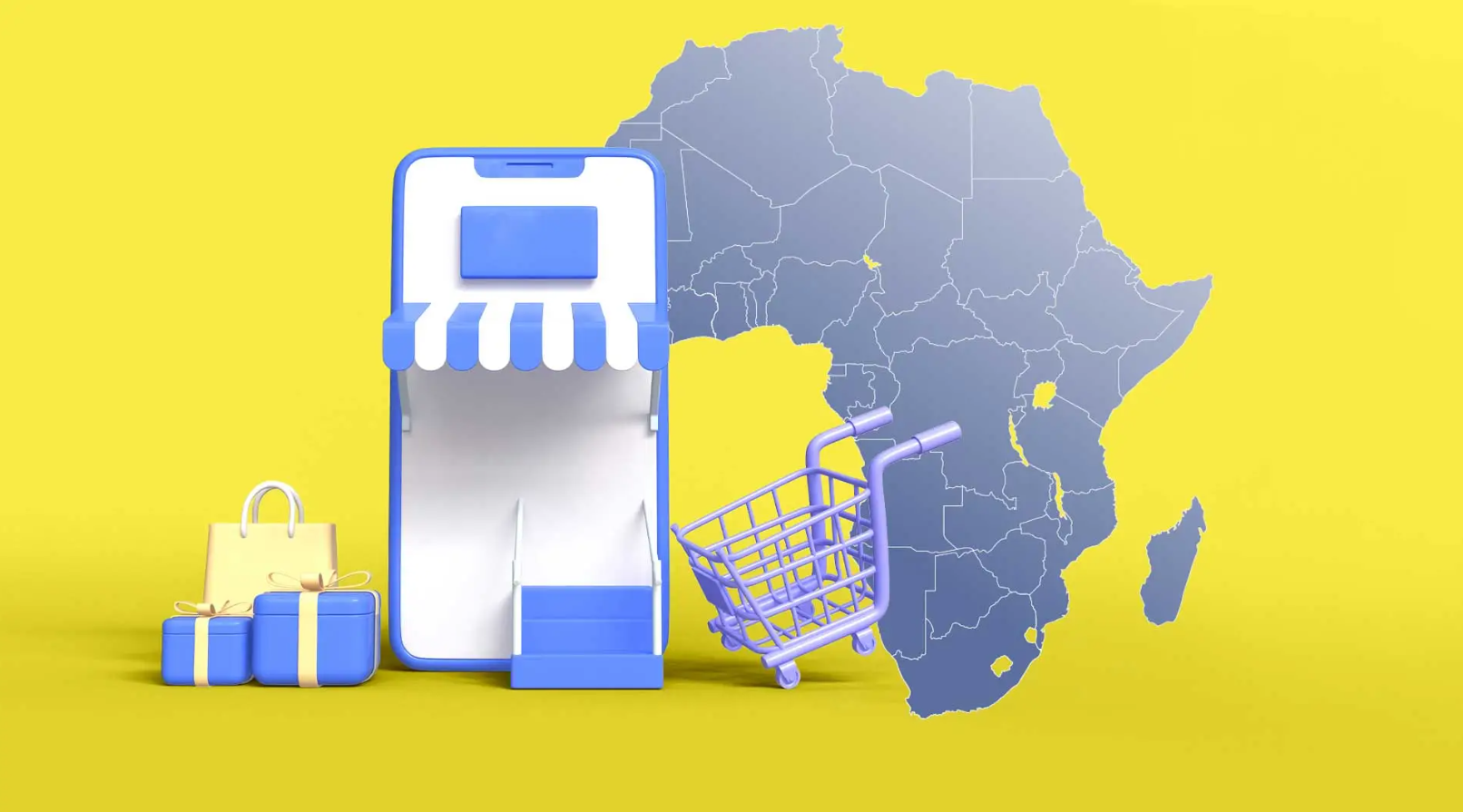
Helping to improve living standards in African countries is the founding reason for the African Continental Free Trade Agreement (AfCFTA). It’s Africa's model and blueprint for transforming the continent into a global trading powerhouse for the future.
But what does the AfCFTA really mean for e-commerce? Africa has more than fourteen economic blocks, with eight regional communities recognised by the African Union. These regional blocs all have different laws and trade agreements, use different currencies, and have different levels of development and GNP. The priority of these economic blocs is to ensure the continuity of trade between their members and to promote diplomatic relations and security, among others.
Nevertheless, this sought-after security is hampering the continent's potential economic growth. A perfect example is the case of e-commerce services. Under normal circumstances, e-commerce companies have delivery capacities of between 24 hours and 3 working days in the national territories in which they operate, depending on their operating sites and the size of the given country.
This means that you can expect to obtain your goods in a relatively short space of time at a much cheaper price than that found in a neighbouring country and, even worse, in another regional economic community.
A few challenges: If Jumia, the main e-commerce platform, for example, operates in Kenya and an online customer in Nigeria wishes to make transactions from its platform, he will generally receive his purchase after a relatively long period of time and with costly constraints, or perhaps never (if there is no air connection) as if he were in Kenya.
Today, it is easier and cheaper to bring a container from Antwerp in Belgium to Lagos than from almost anywhere else in Africa. This difference is the result of the economic barriers put in place by the regional economic communities, including customs duties, taxes, bureaucracy, and so on.
Promoting trade integration means eliminating taxes or at least harmonising legislation, making administrative procedures more flexible, and, ultimately, providing government support to facilitate trade.
These changes will be of great benefit to e-commerce companies. Jumia, for example, which only makes deliveries within the countries in which it operates, could, after these changes, deliver parcels from Côte d'Ivoire to Burkina Faso, or from Morocco to its customers in Mauritania at lower cost and within a short time.
African e-commerce is set for a bright future. African start-ups operating in the e-commerce sector continue to show promise over the next few years.
According to digital economy consultancy TechCabal Insights, in a report published on 12 October 2023, the global turnover of e-commerce platforms operating in Africa is expected to reach $59.18 billion in 2027, compared with just $32.49 billion in 2022 and $13.58 billion in 2018. These start-ups are expected to benefit from the boom in the continent's electronic payments sector, and from improvements in infrastructure and logistical capacity following the implementation of the African Continental Free Trade Area (AfCFTA).