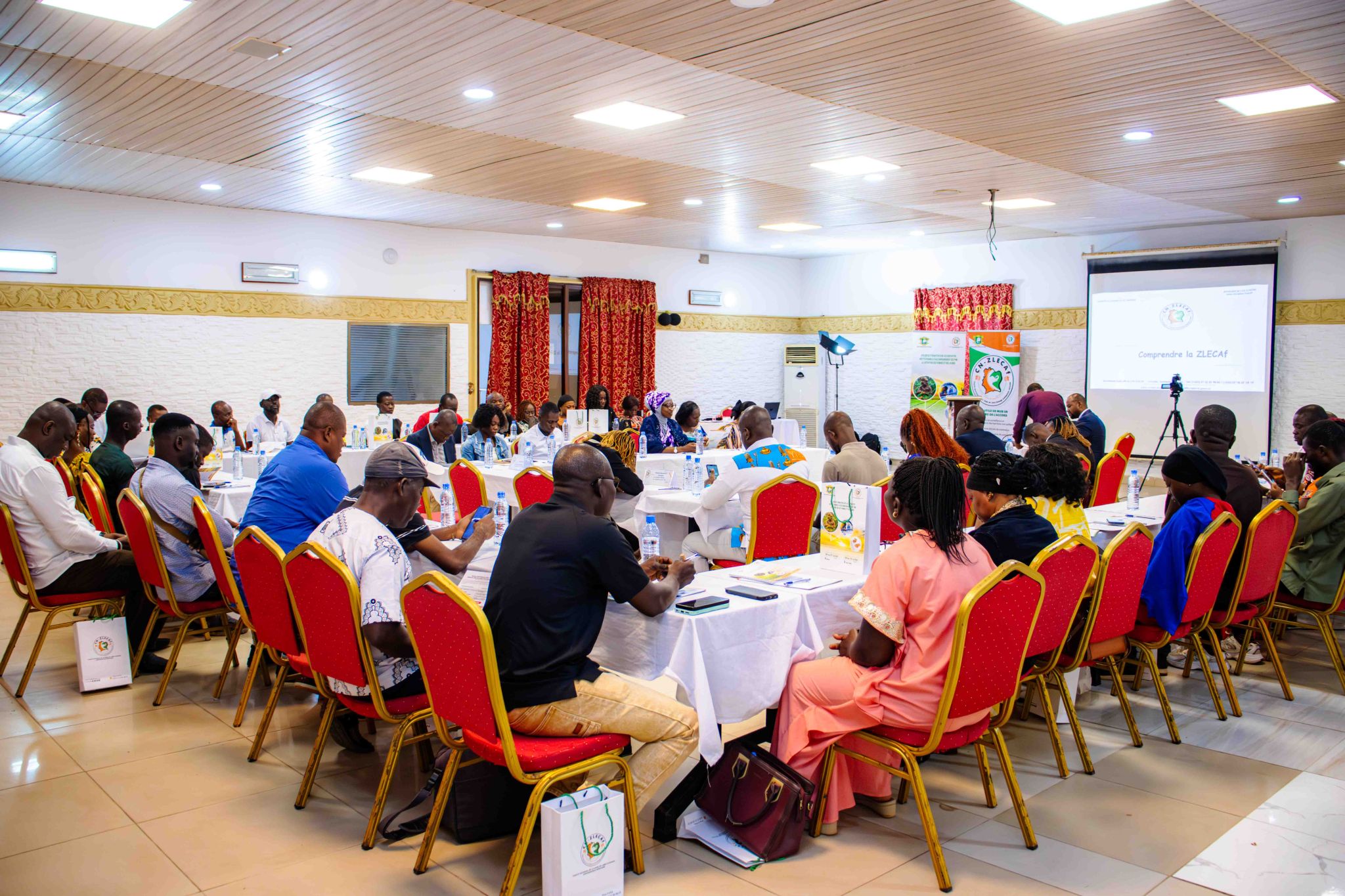
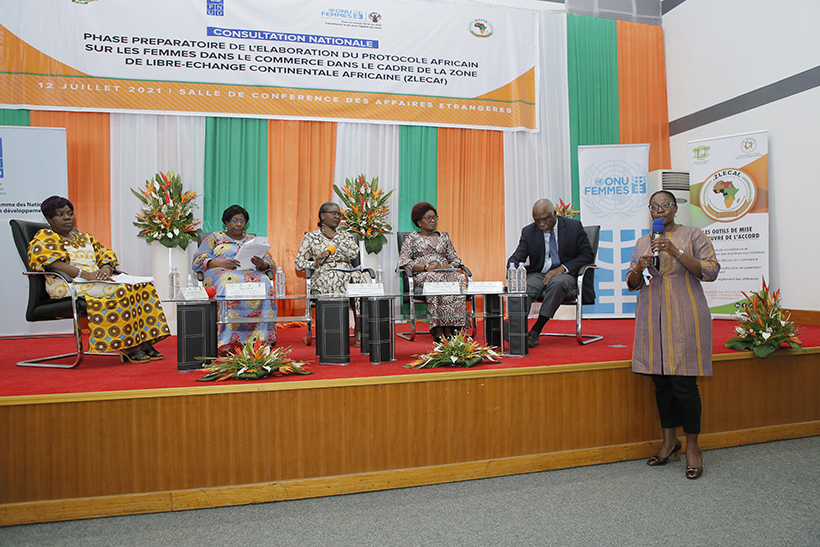
The United Nations Development Programme (UNDP) and UN Women, in their role as technical supporters to the African Continental Free Trade Area (AfCFTA) Secretariat, hosted a national consultation in Abidjan on Monday, 12 July 2021. The goal was to draft the African protocol on women in cross-border trade.
This event was attended by Alcide Djédjé, Minister Delegate attached to the Minister of State, Minister of Foreign Affairs, African Integration and the Diaspora, responsible for African integration. The consultation aimed to highlight the UN's contribution to promoting women’s roles in cross-border trade and ensuring that their priorities are considered in the ongoing dialogue initiated by African states.
The meeting was built on dialogues that the UN system had begun in 2019 with key stakeholders in Côte d'Ivoire. These discussions provided a platform for participants to assess the scope of the AfCFTA, outline their priorities, and address potential challenges to maximize the benefits from this agreement.
Acting UN Resident Coordinator Ghitu Mundunge emphasized that hosting this event in Côte d'Ivoire underscored the country's commitment to the AfCFTA agreement. This consultation also served as a preparatory step for the high-level regional conference set to take place in Ghana from 04 to 06 August 2021, which will focus on drafting the protocol on women and gender-sensitive trade.
Mundunge noted that the AfCFTA, which encompasses 54 out of 55 AU MEMBER STATES, aims to create a continent-wide liberalised market for goods and services. He mentioned that significant progress has been made toward this vision since inter-state negotiations began at the 25th Ordinary Session of the AU Conference in June 2015 in Johannesburg.
He highlighted that with a population exceeding one billion, the AfCFTA is expected to lift nearly 30 million people out of extreme poverty and increase the incomes of approximately 68 million people who live on less than $5.50 per day. Additionally, the AfCFTA promises higher wage gains for women (10.5%) compared to men (9.9%).
For Côte d'Ivoire specifically, the implementation of the AfCFTA is projected to boost exports to the rest of Africa in priority sectors that involve significant female participation, including agriculture, small-scale manufacturing, food, clothing, handicrafts, and various entrepreneurial services.
Mundunge pointed out that to fulfil this commitment to women, it is critical to address the unique challenges they face to inform the development of the African Protocol on Women in Trade.
The national consultation featured two online presentations: “Presentation of the context and approach to the national consultations,” led by Odette Kabaya, Regional Advisor of the UNDP Regional Service Centre for Africa, and “State of progress of the AfCFTA - implementation and other areas of work,” delivered by a Senior Investment Expert at the AfCFTA Regional Secretariat.
Two panel discussions were also held: “What should be the objective of the protocol on women in trade,” moderated by Carol Flore Smereczniak, UNDP Resident Representative, and “Women’s experiences of cross-border trade,” moderated by Antonia Ngabala Sodonon, UN Women Resident Representative.
(AIP)
sdaf/cmas