

The effects of the colonial era have left African countries primarily exporting raw materials to Europe and Asia, with a minimal trade being done among themselves. In fact, only 16% of trade exchanges by African states occurs within the continent. Inspired by Europe, Africa seeks unity and increased intra-African trade within its potential market of 1.2 billion people. Establishing a Free Trade Area is the first step toward achieving the economic union that pan-African theorists have envisioned for decades.
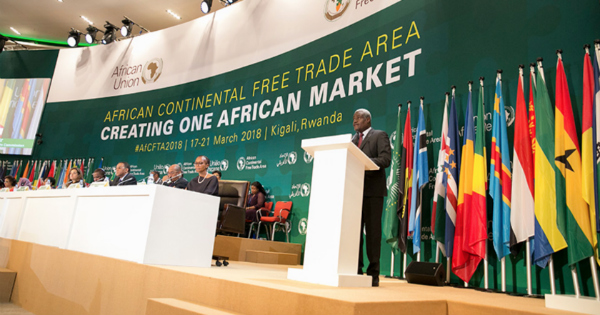
On 01 January 2021, the African Continental Free Trade Area (AfCFTA) officially commenced operations, with 54 signatory countries (all African countries except Eritrea) and 34 ratifying the agreement at the time of writing. Headquartered in Ghana, the AfCFTA aims to reduce customs duties by 90% on products manufactured within the continent, a move expected to boost trade and foster industrialisation. This could lead to significant economic growth, potentially enhancing the continent’s Gross Domestic Product (GDP) of $2.3 trillion, surpassing Italy's but remaining below France's.
Key Elements for AfCFTA Success
Harmonisation: The AfCFTA presents an opportunity to align and unify the various regional economic communities (RECs) that have struggled to bring integration to the continent.
Solidarity: More economically developed and wealthier countries must support less developed member states. An equalisation mechanism should be put in place to bridge gaps between nations that have leveraged their geographic advantages, such as port access, and those that are landlocked and face more significant economic challenges.
Protecting National Economies: Participating countries must prioritize African-made products. The origin clause, which specifies the required local production percentage for goods, is critical. Imposing higher customs duties on goods produced outside the zone can enable developing economies to achieve steady growth. Economic diversification within the zone will help ensure complementarity among member nations.
Transformation of Raw Materials: Regional countries must go beyond exporting raw materials by adding value locally through increased processing and industrialisation. To achieve this, it is essential to attract investors and create policies that foster investment.
Logistics: Developing road infrastructure between countries is crucial to facilitating intra-African trade and making it competitive with trade from Asia. Substantial infrastructure investments are necessary for member countries to maximise the benefits of the AfCFTA.
With its immense potential for economic growth, the AfCFTA provides Africa with an opportunity to chart its path to prosperity. However, this ambitious project must navigate significant challenges to succeed. Member states must make pivotal decisions collectively to ensure the effective implementation of this transformative agreement.
By Thomas YAPO
financialafrik