



The ECOWAS Commission, in partnership with the International Trade Centre (ITC), organised the 2nd Virtual Regional Workshop on the African Trade Observatory (ATO) on 8 September 2021. This workshop gathered experts from trade ministries, statistical agencies, and representatives of customs authorities to assess the current development status of the Observatory.
The African Trade Observatory is one of the five key operational instruments of the African Continental Free Trade Area (AfCFTA), alongside the rules of origin, the online negotiation forum, the monitoring and elimination of non-tariff barriers, and the digital payment system. These tools were unveiled during the 12th Extraordinary Summit of the African Union, held in July 2019 in Niamey, Niger.
In his opening remarks, Mr. Kolawole Sofola, Acting Director of Trade, representing H.E. Jean Claude Kassi Brou, President of the ECOWAS Commission and Tei Konzi, Commissioner for Trade, Customs, and Free Movement, underscored the AfCFTA’s importance in achieving sustainable development goals, fulfilling the AU's Agenda 2063, and furthering regional integration. Before officially opening the meeting, he outlined the benefits that the ATO is expected to bring to the ECOWAS region. These include enhanced competitiveness, expanded market opportunities for traders, and the development of regional value chains and new industries.
This second regional workshop provided an opportunity to review the progress made in operationalising the African Trade Observatory. During the session, the ITC presented an overview of the observatory, detailing its main features and ways in which national experts can engage with the platform.
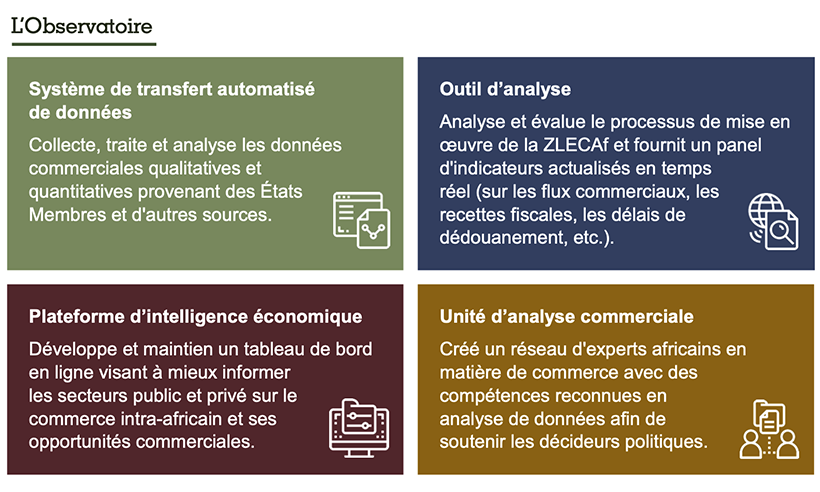
The ATO is designed to offer reliable, real-time trade data and provide African businesses with information on market trends, opportunities, and access conditions. Additionally, the ATO Monitor module enables government agencies and policymakers to track the AfCFTA implementation process and assess its economic impacts.
The African Trade Observatory has four core features: an automatic data transfer system, the Monitor module, a business intelligence dashboard, and a trade analysis unit. The development of the West African Trade and Competitiveness Observatory by the ECOWAS Commission, in collaboration with ITC and as part of the EU-funded West Africa Competitiveness Programme, is intended to complement the functions of the ATO.
By Momar Diack SECK